
Capital gains tax for non-residents
When selling real estate in Spain, two taxes apply. The first is capital gains tax, i.e. a tax on the profit you make from the sale. The second is the land value increase tax, known as PLUSVALÍA MUNICIPAL. Let’s look at these two taxes in more detail.
The capital gains tax rate for non-residents selling real estate is 19%. This means 19% of your profit, which is calculated as the sale price minus the purchase price and minus all acquisition-related expenses.
Acquisition-related expenses include the 10% property transfer tax, notary and Land Registry fees, any agency commission that was included in the purchase price, and all mortgage interest if the property was bought with a loan.
Rates and deadlines
The law provides that a non-resident has almost 4 months to file the corresponding tax return. However, in practice, the Spanish Tax Office, in order not to track a non-resident throughout this period, has introduced its own rule: at the time of the transaction, 3% of the sale price is withheld from the seller as a guarantee that capital gains tax will be paid. The non-resident then has 4 months to file the relevant tax form, stating the purchase and sale prices and expenses and, if necessary, either pay the remaining amount due or claim a refund of any overpaid tax. Depending on the situation and the sale price, the amount of this tax can be estimated in advance so that the outcome is as favourable as possible.
How is capital gains tax paid? How does the process work?
The tax form can be submitted to the Tax Office by a personal accountant, tax representative or real estate agency – there is no need to go there in person. If you have a digital taxpayer signature, the return can also be filed online, attaching all the required documents. The Tax Office reviews the application within 6 months and, if an overpayment is found, refunds the money to the applicant’s bank account.
If any documents needed to calculate notary or other expenses are lost, copies of the relevant documents can be requested from the notary’s office.
It is not advisable to avoid paying the tax if the 3% withheld turns out to be less than the actual capital gains tax due. Situations vary, and the Tax Office can update all data; any resulting debt may seriously spoil your plans in the future.
Capital gains tax for residents
Tax rates for residents are significantly higher. 19% applies to the first €6,000 of profit, from €6,000 to €50,000 the rate is 21%, and from €60,000 of profit on the sale the rate is 26%. At the same time, tax residents of Spain and any EU country benefit from an important exemption: if the funds obtained from the sale of their main residence are fully reinvested in a new home within two years, the entire amount is exempt from tax. If the new home is cheaper, capital gains tax is paid on the difference. For this reason, residents confidently declare such a sale in their annual tax return.
Land value increase tax (Plusvalía)
The Plusvalía tax is a land value increase tax paid by everyone – both tax residents and non-residents. Its logic is that during the time you owned the property, inflation and land values increased. The longer the property was in your ownership, the higher this tax will be. The tax is paid by the seller. It can only be avoided if the seller has made no profit or has earned less than was invested in the property. The tax amount is calculated by the local council, and due to the complex calculation method it is impossible to predict it exactly in advance.
However, municipal websites offer tools that allow you to estimate this tax fairly accurately (with a margin of about €100). Before preparing for the transaction, you enter the purchase date, sale date and amount, and obtain a calculation that lets you roughly forecast the amount of Plusvalía.
At the time of the transaction, the notary warns about the obligation to pay this tax and, if the seller tries to avoid paying it (this is common among non-residents), the buyer will have to pay it. In practice, there is a rule in Spain that the Plusvalía amount for the buyer is withheld from the non-resident seller’s proceeds at settlement. Once the buyer receives the payment slip issued by the local council, the buyer and seller make the final settlement between themselves. This may take six months or longer. If the seller is a Spanish tax resident, this scheme is usually not applied.
Important! Even if the seller knows in advance that they will not make any profit from the sale – and sometimes the property is sold for less than it was purchased for – the Tax Office will still withhold 3% of the sale price, and the local council will in any case calculate the Plusvalía amount. The seller must then contact the relevant authorities with documents proving the absence of income and apply for a refund of the amounts paid.
 387
387
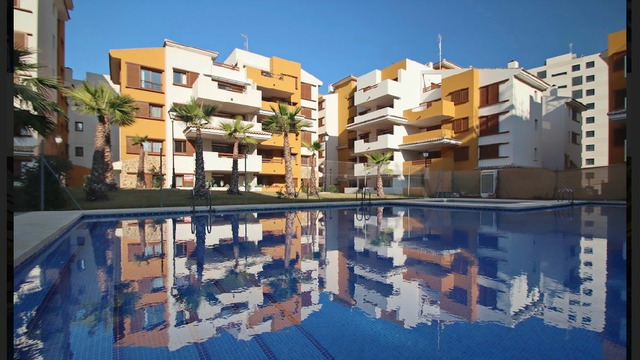

 Built area, m2 : 142
 Bedrooms : 3
 Bathrooms : 2